
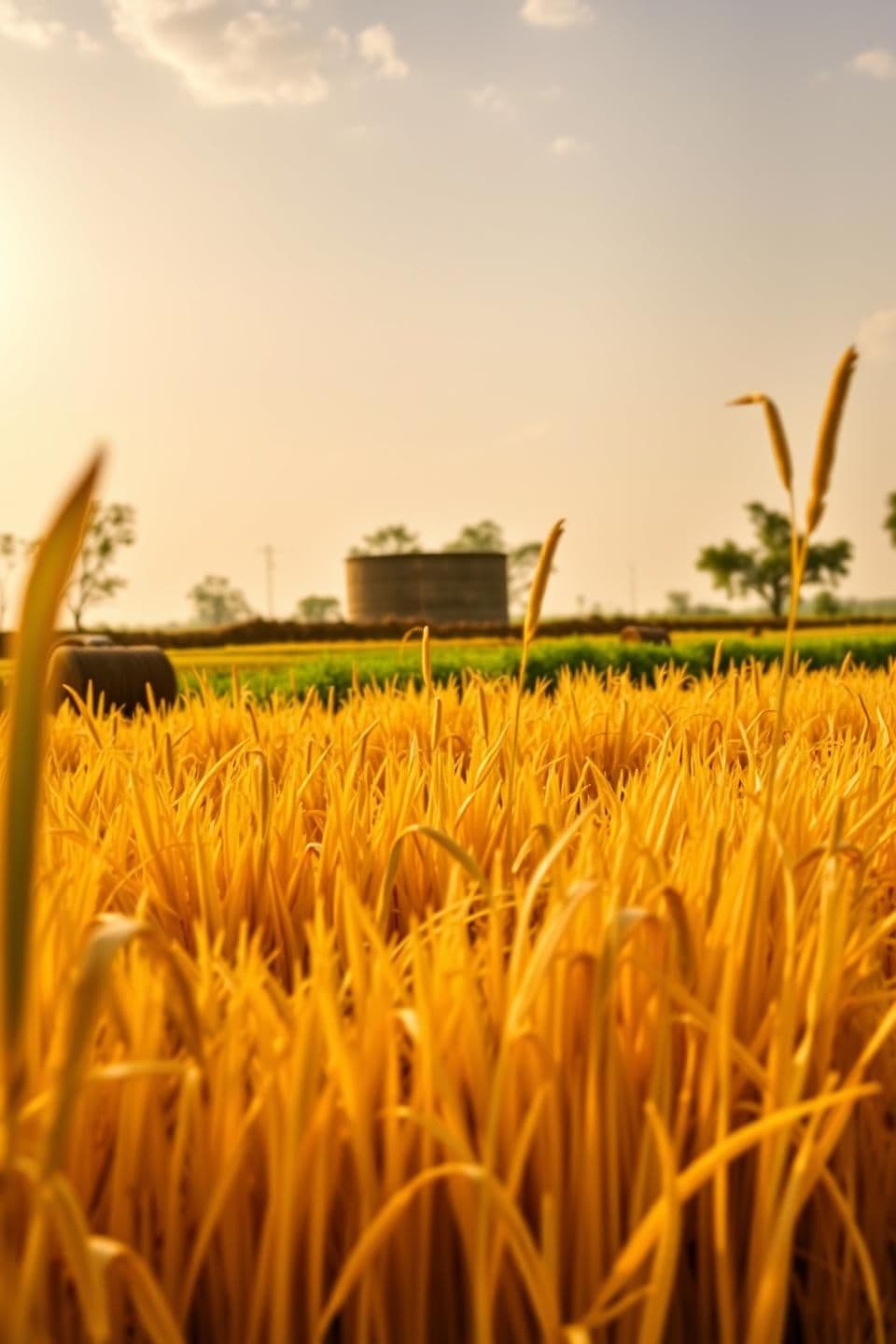
IMPORTANT: Generate with all text in KN script only. Create an image 🌾 Our Agricultural Culture 1. Introduction: India has been an agricultural country since ancient times. The lifestyle of the people, food habits, festivals, traditions, worships — everything is related to agriculture. Agriculture is not just a profession that provides food, it is the basic existence of our life. About 60–70% of the population of India is involved in agriculture and its related activities. The phrase “Soil is our mother, crops are our life” shows the lifeblood of our agricultural culture. 2. History of Agriculture: The history of agriculture in India dates back thousands of years. During the Indus Valley Civilization, people were cultivating crops like wheat, corn, and millet. At that time, farmers used to cultivate by observing the stars, moon, and rainy seasons. They knew the art of cultivating crops by studying the properties of soil, the flow of river water, and the direction of the wind — all these. Even today, traditional farming practices are still practiced in many villages. 3. Importance of Agriculture: Source of Food: Agriculture is the basis of our food and life. Source of Employment: About 60% of India's population is dependent on agriculture. Economic Power: Agriculture plays a very important role in India's gross national income. Support for Industry: Raw materials for industries like textiles, sugar, tea, coffee are obtained from agriculture. Environmental Balance: Green fields purify the air and retain moisture in the soil. Source of Culture and Festivals: Our festivals are in line with the agricultural season. 4. Our Village Agricultural Culture: The life of the village revolves around agriculture. Before sunrise in the morning, the farmer gets up and feeds the cow, then goes to the field and works. In the afternoon, the family gets together and has lunch in the field - this is a symbol of village harmony. The custom of worshipping God for the rains to bring good crops continues even today. During the harvest, the villagers dance and sing together, which is a symbol of their happiness. Village unity, cooperation, hard work and selflessness are the foundations of agricultural culture. 5. Linkage between agriculture and religion – beliefs: Indians worship nature in the form of gods. Soil, rain, sun, wind – all these are considered as gods. Mother Earth: They worship the soil in reverence. Varuna Dev: The god of rain, farmers pray for rain. Basavanna: The buffalo god, symbol of agricultural labor. Sun God: The root force of crop growth. These beliefs reflect the natural connection of man with nature. 6. Types of agriculture: Traditional agriculture: An ancient method of conserving the natural energy of the soil. Modern agriculture: Use of machinery, chemical fertilizers, improved seeds. Organic agriculture: Eco-friendly agriculture using natural fertilizers and pesticides. Mixed farming: Animal husbandry, milk production, etc. along with crops. Commercial agriculture: Growing sugarcane, cotton, flowers, oilseeds based on market demand. 7. Festivals with agriculture: Indian festivals are related to the stages of agriculture. Makar Sankranti: Festival of new crop harvest. Pongal: Festival where farmers celebrate the joy of crop harvest. Ugadi: Beginning of the new agricultural year. Besaya festival: Worship of God before sowing the crop. Diwali: A time of rest after the harvest. These festivals have preserved the spirit of agricultural culture. 8. Transformation of agricultural tools: In the old days, farmers used cows, buffaloes and simple tools. Kodu, koytiguddali, harava, kante etc. are ancient tools. Today, tractors, harvesters, pump sets, irrigation machines are an integral part of agriculture. Although this mechanization makes work easier, the natural strength of the soil is decreasing. 9. Challenges of today's agriculture: Unstable monsoon Land fragmentation Water shortage Excessive use of chemical fertilizers Deterioration of soil fertility Instability of market prices Farmer debt and suicide Low interest in agriculture among the younger generation 10. Steps that can be taken for agricultural development: Encouragement of organic farming - Farmers should be motivated towards eco-friendly agriculture. Expansion of irrigation schemes - Arrangements should be made to make water available everywhere. Guarantee of fair price to farmers - The government should give the right price to farmers. Education and training - Farmers should be made aware of new technologies. Attracting youth to agriculture - Respect for agriculture should be instilled in the new generation. Agricultural research and science - New crops and techniques should be developed. 11. Link between agriculture and environment: Agriculture has an inextricable link with the environment. Soil, water, air, light, living beings – all are part of agriculture. Soil becomes powerful through organic farming. Rainwater harvesting, growth of green crops, use of natural fertilizers – these help in environmental balance. 12. Social and cultural status of the farmer: A farmer is not just a crop grower, he is a caretaker of the society. Cities live because of his hard work. A farmer’s life is simple, but full of hard work. The country’s economy becomes strong because of him. Thus, the farmer should be respected in the society. 13. Our agricultural songs and folk art: During the agricultural season, farmers work day and night while sowing and harvesting crops. Nature, rain, soil, deity, hard work, happiness are all reflected in their songs. Folk songs are a living example of agricultural culture. For example: Folk verses like “Soil is mother, you are life”. 14. Future Agriculture: India's future lies in the development of agriculture. Organic farming, high-tech farming, water conservation, use of renewable energy will take agriculture to the next level. If the youth implement technology in agriculture, the development of the country is certain. 15. Conclusion: “Our agricultural culture” is not just a story of fields, greenery, and crops — it is the philosophy of our life. It is a confluence of hard work, trust, cooperation, respect for nature, and traditions. We eat our food only through the sweat of the farmer, and therefore the farmer is equal to God. It is our duty to preserve the honor of agriculture, preserve traditional methods, and move towards organic farming. The verse “Annadata Sukhi Bhava” reminds us of this truth.